The Westminster Dictionary of Theological Terms, Second Edition: Revised and Expanded by Donald K. McKim
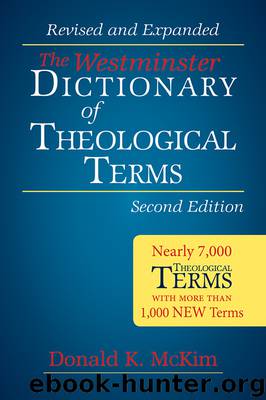
Author:Donald K. McKim
Format: epub
Publisher: Westminster John Knox Press
M
M A designation from B. H. Streeter (1874–1937) in 1924 for the material that is unique to Matthew’s Gospel alone. Streeter related this to his four source hypothesis of the Synoptic Gospels. See Four Document (Source) Hypothesis of the Synoptic Gospels.
Macedonianism A sect deriving from Macedonius (d. 362), an Arian bishop of Constantinople, who denied that the Holy Spirit was divine. Also called the Pneumatomachi.
Madonna (Ital. “my lady”) The Virgin Mary, or a representation of Mary, usually with the child Jesus. The image appears in various forms of art such as painting, stained glass, sculpture, and medals. See also Mary, Virgin.
magi (Gr. magoi, “sages, wise persons”) Name for the astrologers who followed the star to worship the infant Jesus (Matt. 2:1–12). Traditionally called the “wise men.”
Magi, Adoration of the The Feast of Epiphany (Jan. 6), which commemorates the homage of the magi to the infant Jesus (Matt. 2:11) and represents God’s self-revelation to the whole world.
magic (Gr. magikē) The use of charms, spells, and rituals to control or influence events, in the belief that these elements may induce a supernatural being to act. The relation of magic to Christianity has a long history.
Magisterial Reformation A term referring to the pattern by which churches were established and supported by civil authority. It contrasts with the Radical Reformation, in which church and state were completely separated. See also Radical Reformation.
magisterium (Lat. magister, “master”) The teaching authority of the church, especially as understood in Roman Catholic theology as resting in the pope and the bishops.
magistrate/magistracy (Lat. magister, “master”) Those who are public officers and carry out governmental functions. Ethical issues about the duties of magistrates in relation to the law of God, freedom of conscience, and other questions in pluralist societies lead to many significant concerns.
Magnificat The first Latin word in the Vulgate (Magnificat anima mea, “My soul magnifies”) of the Song of Mary (Luke 1:46–55) at the greeting by her cousin Elizabeth, who says that Mary will be the mother of the Messiah.
mainline/mainstream churches A term with varying meanings clustering around those Protestant denominations that have historically been major forces in American religious life. More generally it may include Roman Catholicism and Judaism. Emphasis on tradition and “standard brand religion” may also be meant.
major orders In Roman Catholicism, the higher ranks of the ordained clergy, including the bishops, priests, deacons, and, formerly, subdeacons (abolished 1972).
Majoristic controversy Sixteenth-century German Lutheran controversy over the relation of good works to salvation in which Georg Major (1502–74) taught the necessity for good works while also maintaining the doctrine of justification by faith. See also good works; justification.
maker A term used of God as creator, particularly in the opening of the Apostles’ Creed: “I believe in God…, Maker of heaven and earth” (see Gen. 1:1).
malediction (Lat. “curse”) A curse; the opposite of benediction.
mammon (Aram. “riches,” Gr. mamōnas) Riches or possessions, which according to the Gospels can become dominant in human life and take God’s rightful place. It is the term used in the KJV translation of Matt. 6:24 and Luke 16:13 but is now not commonly used in English.
Download
This site does not store any files on its server. We only index and link to content provided by other sites. Please contact the content providers to delete copyright contents if any and email us, we'll remove relevant links or contents immediately.
The Lost Art of Listening by Michael P. Nichols(7551)
Why I Am Not A Calvinist by Dr. Peter S. Ruckman(4188)
The Rosicrucians by Christopher McIntosh(3548)
Wicca: a guide for the solitary practitioner by Scott Cunningham(3213)
Signature in the Cell: DNA and the Evidence for Intelligent Design by Stephen C. Meyer(3185)
Real Sex by Lauren F. Winner(3061)
The Holy Spirit by Billy Graham(3000)
To Light a Sacred Flame by Silver RavenWolf(2865)
The End of Faith by Sam Harris(2773)
The Gnostic Gospels by Pagels Elaine(2563)
Waking Up by Sam Harris(2494)
Jesus by Paul Johnson(2406)
Nine Parts of Desire by Geraldine Brooks(2403)
Devil, The by Almond Philip C(2367)
The God delusion by Richard Dawkins(2341)
Heavens on Earth by Michael Shermer(2312)
Kundalini by Gopi Krishna(2217)
Chosen by God by R. C. Sproul(2202)
The Nature of Consciousness by Rupert Spira(2141)
